![Official Logo of www.vedm.store [Inspired by the Vedas, rooted in Sanatani culture – premium apparel proudly Made in Bharat: T-Shirts, Oversized, T-Shirts, Hoodies, Sweatshirt, Polo T-Shirts, Caps]](https://www.vedm.store/wp-content/uploads/2025/09/www.vedm_.store_.png)
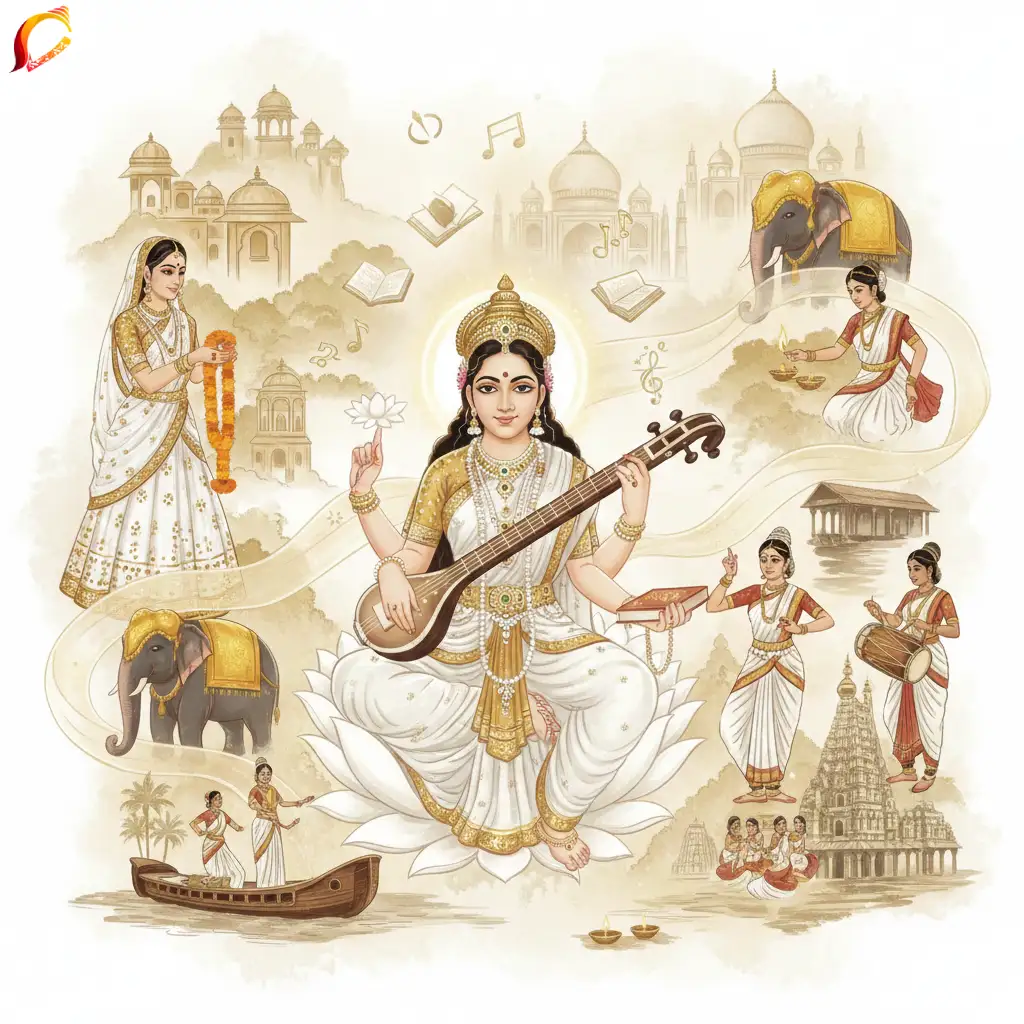
What does Saraswati Puja mean to you?
For some, it is the sound of conch shells and chanting under a yellow canopy.
For others, it is the quiet act of placing books before a veena-playing goddess and not touching them for a day.
Across India, Saraswati Puja is not just a festival. It is an emotion. A pause. A reminder that knowledge, art, and wisdom deserve reverence before achievement.
Yet, the way this sacred occasion is celebrated varies beautifully from state to state. From the vibrant pandals of West Bengal to the subtle, temple-centered rituals of Tamil Nadu, each region adds its own cultural signature.
In this in-depth guide, we explore how Saraswati Puja is celebrated differently in Bihar, West Bengal, Kerala, Tamil Nadu, and Karnataka, comparing rituals, symbolism, community involvement, and lived experiences. If you have ever wondered why the same goddess inspires such diverse traditions, you are in the right place.
Why Saraswati Puja Matters Across India?
Before diving into regional variations, it helps to understand why Saraswati Puja holds such universal importance.
Saraswati is revered as the goddess of:
- Knowledge and learning
- Music, arts, and creativity
- Speech, wisdom, and clarity
For students, artists, teachers, writers, and musicians, Saraswati Puja symbolizes a fresh beginning. Exams, creative journeys, academic milestones — all feel lighter when blessed by the goddess.
While Vasant Panchami is the most common date, the form, scale, and rituals of Saraswati Puja adapt to local history, climate, and cultural values.
And that is where the real story begins.
Saraswati Puja in Bihar
Bihar has long been associated with learning. Ancient universities like Nalanda and Vikramshila once made this land a global center of education. That intellectual legacy still reflects in how Saraswati Puja is observed here.
How Saraswati Puja Is Celebrated in Bihar
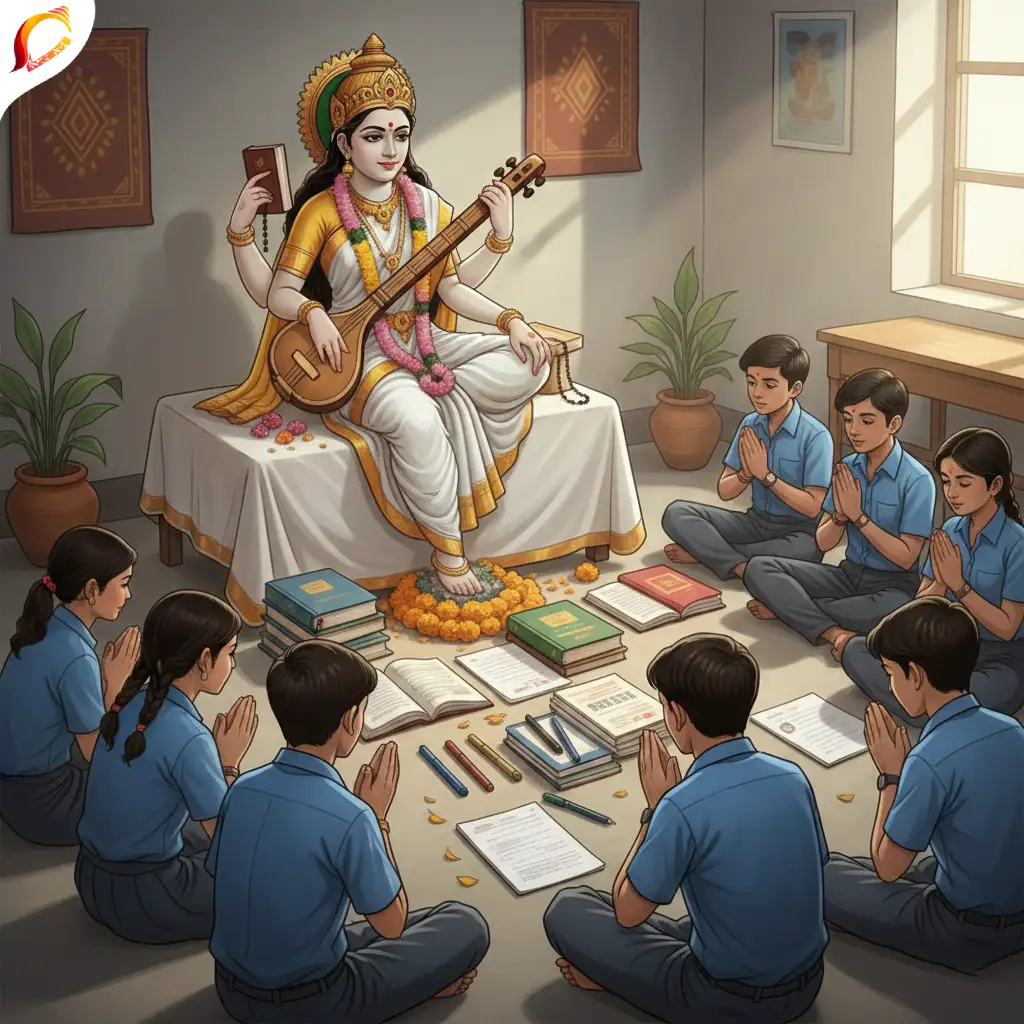
In Bihar, Saraswati Puja is deeply student-centric.
Key Rituals and Traditions
- Schools and colleges organize Saraswati Puja within campus grounds
- Students place books, pens, exam admit cards, and musical instruments before the idol
- Writing or studying is avoided until Pushpanjali the next day
- Idols are traditionally dressed in white or yellow attire
Community Involvement
Unlike some states where large public pandals dominate, Bihar favors intimate gatherings:
- Classroom-based pujas
- Small neighborhood pandals
- Family-led rituals at home
There is sincerity rather than spectacle.
Significance
Ask any student from Bihar, and they will recall:
- Nervous prayers before board exams
- Teachers guiding students during offerings
- The belief that Saraswati Puja brings focus and calm
It is not about grandeur. It is about hope.
Saraswati Puja in West Bengal
Why West Bengal Is Synonymous with Saraswati Puja?
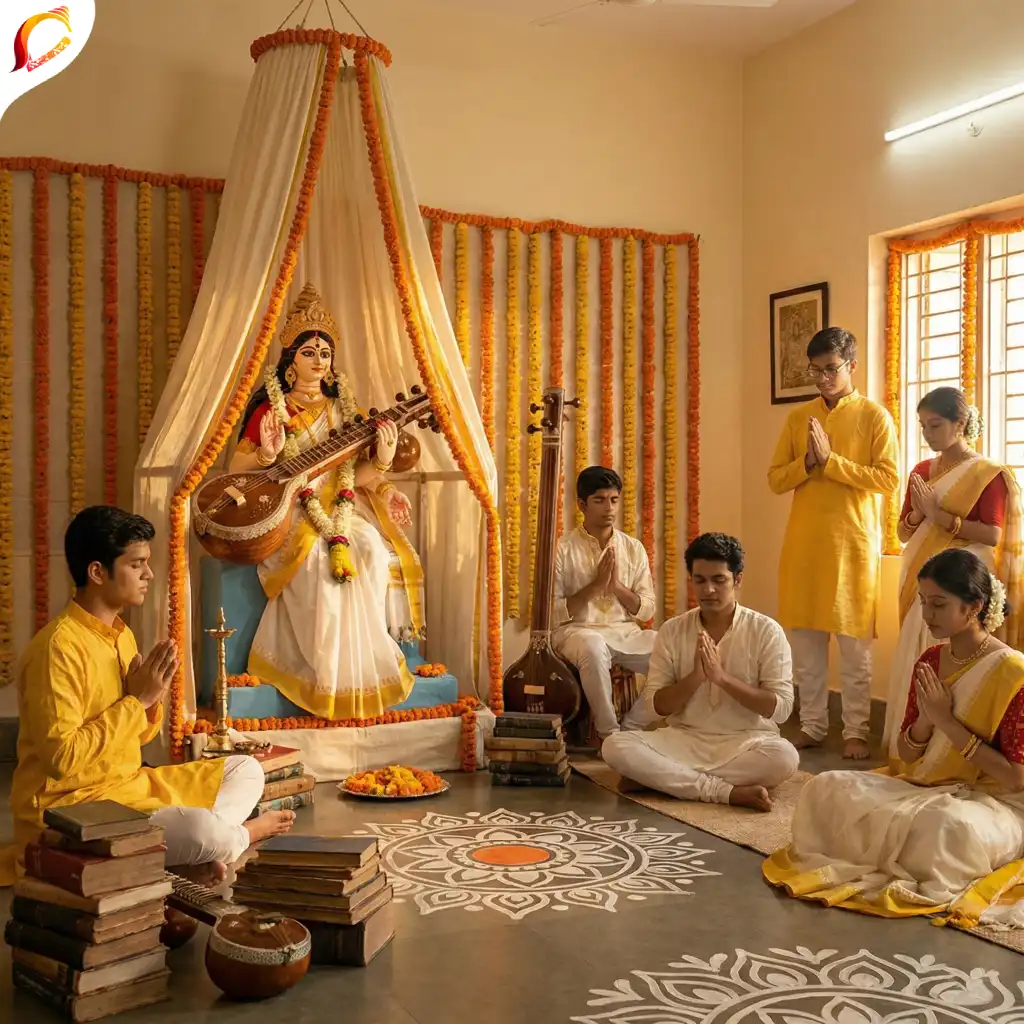
If there is one state where Saraswati Puja feels like a cultural event, it is West Bengal. Often called “Banglar Saraswati Pujo”, the festival blends devotion with art, youth culture, and social bonding.
Iconic Visual Aesthetics
- Large, artistic idols inspired by classical Bengali art
- Yellow sarees symbolizing spring and prosperity
- Intricate pandals rivaling Durga Puja creativity
The Student-Led Celebration
Saraswati Puja in West Bengal is famously organized by:
- College unions
- School committees
- Student groups
For many, it is their first experience organizing a public festival.
Ritual Highlights
- Early morning Anjali by students
- Books, guitars, violins, paintbrushes placed before the idol
- Cultural programs including poetry, music, and recitations
A Social Festival Too
Let us be honest. Saraswati Puja in Bengal is also about:
- Dressing up
- Meeting friends
- Capturing memories
Yet, beneath the fun lies genuine devotion. The belief in Saraswati’s blessings runs deep.
Also Read: Why Saraswati Puja Matters More for Students in the Digital Age?
Saraswati Puja in Kerala
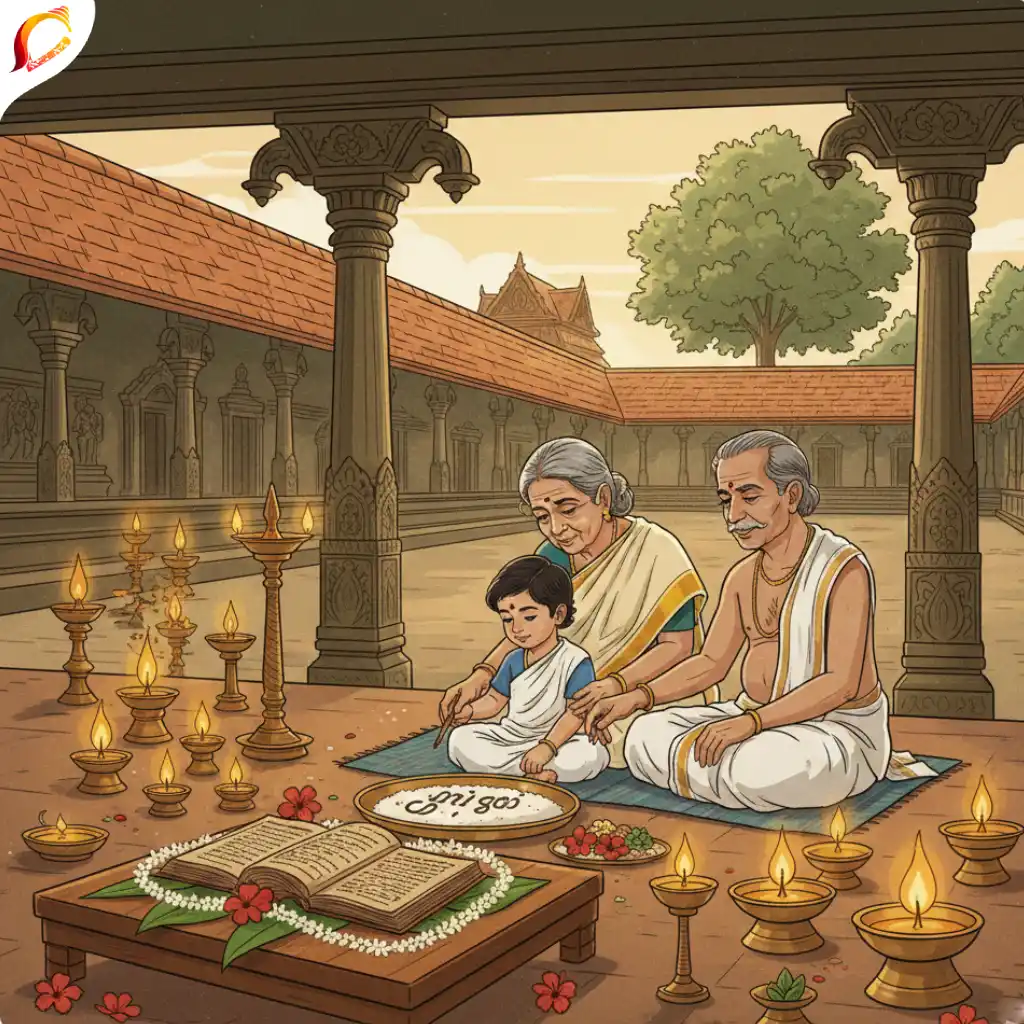
In Kerala, Saraswati Puja does not always appear as a standalone festival. Instead, it is closely connected to Navaratri and Vijayadashami.
Here, the goddess is revered quietly, with emphasis on discipline and tradition.
Saraswati Puja During Navaratri
- Books, notebooks, and instruments are placed in the Pooja Room
- This ritual is known as Pustaka Puja
- Learning activities stop for three days
Vijayadashami: The Day of New Beginnings
On Vijayadashami:
- Children are initiated into learning through Vidyarambham
- Elders write the first letters on rice or sand
- Saraswati is invoked alongside other deities
Atmosphere and Tone
Unlike the festive buzz of West Bengal, Kerala’s Saraswati Puja is:
- Calm
- Meditative
- Family-oriented
It reflects Kerala’s philosophy: knowledge grows best in silence.
Saraswati Puja in Tamil Nadu
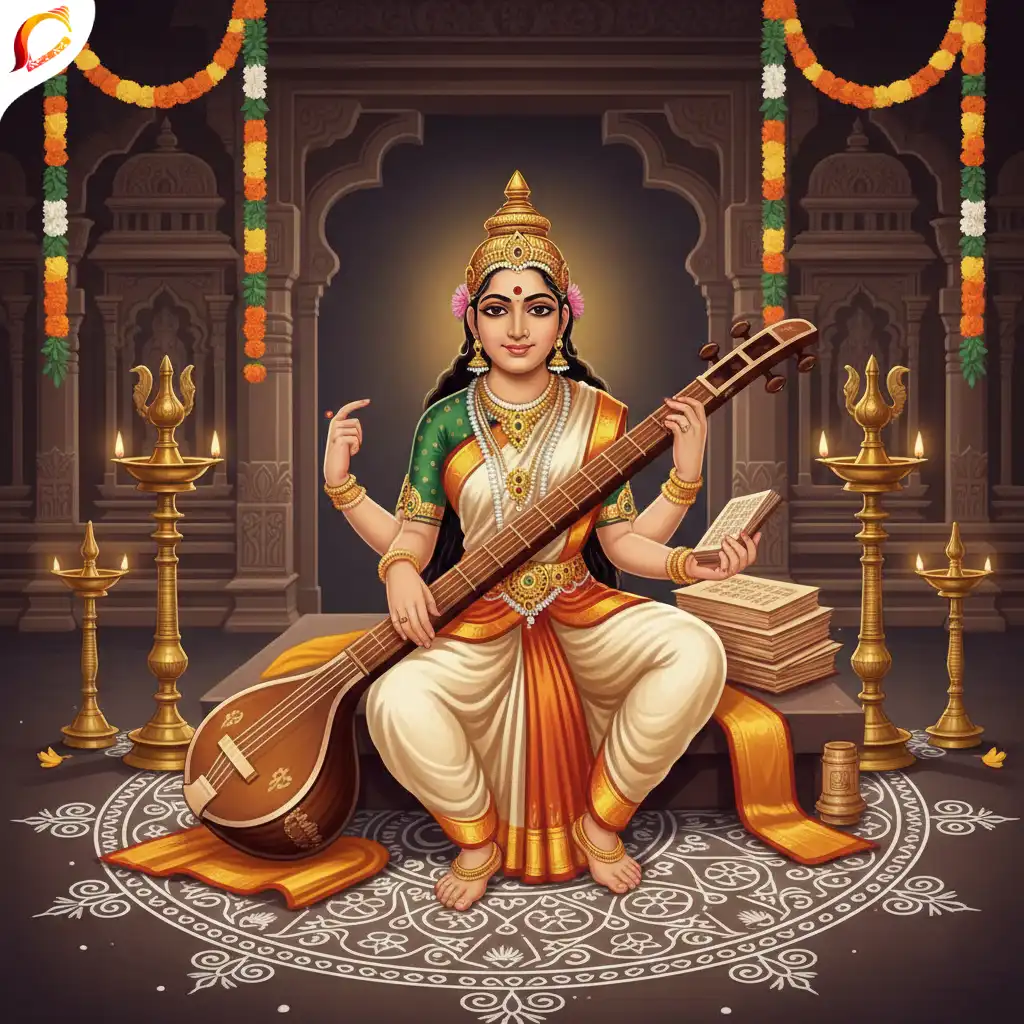
In Tamil Nadu, Saraswati is deeply respected, but the celebration is woven into broader educational traditions rather than a single-day festival.
Integration with Navaratri Golu
- Saraswati is worshipped on the Ayudha Puja and Saraswati Puja days
- Books, tools, and instruments are arranged on steps (Golu)
- Schools conduct special prayers
Ayudha Puja Connection
Interestingly, Saraswati Puja in Tamil Nadu aligns with:
- Worship of tools of trade
- Respect for craftsmanship
- Honoring both intellectual and practical skills
Unique Ritual Touchpoints
- Classical music and Bharatanatyam students offer performances
- Educational institutions hold prayer assemblies
- Minimal idol immersion culture
This approach emphasizes continuous learning, not just ceremonial worship.
Saraswati Puja in Karnataka
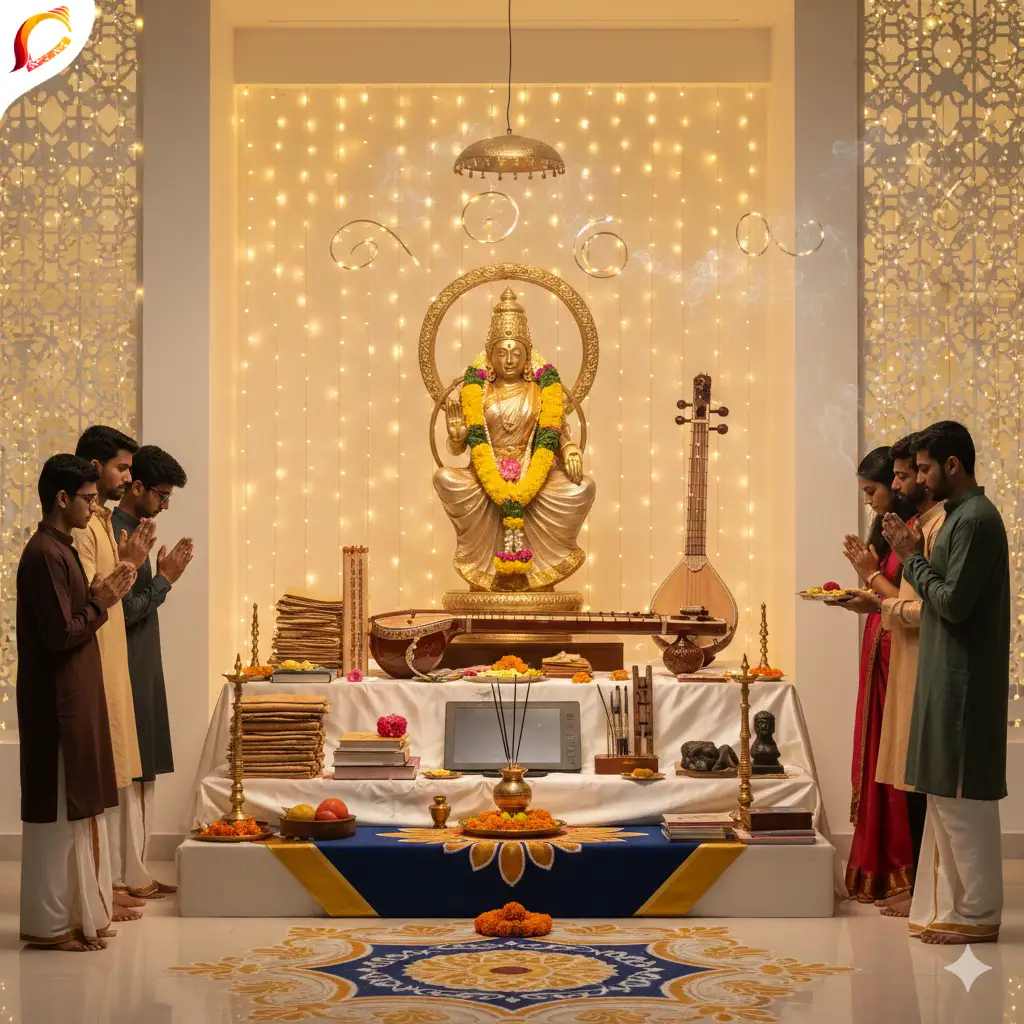
Karnataka bridges northern and southern traditions, and its Saraswati Puja reflects this balance.
Saraswati Puja During Navaratri
- Celebrated on the eighth day of Navaratri
- Books and musical instruments are worshipped
- Writing and learning pause temporarily
Educational Institutions Take the Lead
- Schools organize Saraswati Puja ceremonies
- Classical music and Yakshagana artists perform
- Children seek blessings from teachers
Regional Variations Within the State
- Coastal Karnataka follows rituals closer to Kerala
- Interior regions mirror Tamil customs
- Urban centers adopt simplified pujas
Karnataka’s celebration adapts without losing essence.
Saraswati Puja Across Indian States
| State | Celebration Style | Main Focus | Community Involvement |
|---|---|---|---|
| Bihar | Simple, student-led | Academic success | Schools & families |
| West Bengal | Grand, artistic | Culture + education | Students & public pandals |
| Kerala | Subtle, ritualistic | Learning discipline | Family-based |
| Tamil Nadu | Integrated with Navaratri | Knowledge + skills | Institutions |
| Karnataka | Balanced tradition | Education & arts | Schools & communities |
Common Threads That Unite All Celebrations
Despite differences, Saraswati Puja across India shares common beliefs:
- Respect for books and learning
- Gratitude toward teachers
- Faith in wisdom over material success
Whether celebrated loudly or quietly, the goddess remains the same.
FAQs: Saraswati Puja Across Indian States
Is Saraswati Puja celebrated on the same day across India?
Not always. While many states observe it on Vasant Panchami, southern states often align it with Navaratri.
Why is Saraswati Puja so big in West Bengal?
West Bengal blends art, youth culture, and education, making Saraswati Puja both devotional and social.
Do people avoid studying during Saraswati Puja?
Yes, in many regions, books are not touched until the puja concludes as a mark of respect.
How is Saraswati Puja different in South India?
Southern states focus more on ritual continuity, temple worship, and Navaratri integration rather than public pandals.
Is Saraswati Puja only for students?
No. Artists, writers, musicians, and professionals also worship Saraswati for creativity and clarity.
Conclusion
Saraswati Puja is a reminder that India does not follow a single cultural script.
From Bihar’s sincere classroom prayers to West Bengal’s artistic pandals, from Kerala’s quiet discipline to Tamil Nadu’s structured reverence, and Karnataka’s balanced traditions — each celebration tells a story.
A story of how knowledge is not just learned, but honored.
As the next Saraswati Puja approaches, take a moment to explore how others celebrate it. Share stories. Learn new rituals. Maybe even blend traditions into your own practice.
After all, wisdom grows when shared.
If you enjoyed this cultural deep dive, explore more stories on Indian festivals, traditions, and creative expressions inspired by heritage. Jai Maa Saraswati.
Help vedm to improve, don’t forget to share your thoughts in the comments,